Our Products
Mentor Programs: Transformational Support Grounded in Experience
Mentorship rooted in lived experience is one of the most powerful ways to support learning and activation. Reverba Global pioneered the first pharma-sponsored mentor program—and continues to evolve mentorship models that meet the needs of patients, providers, and organizations alike.
What It Is:
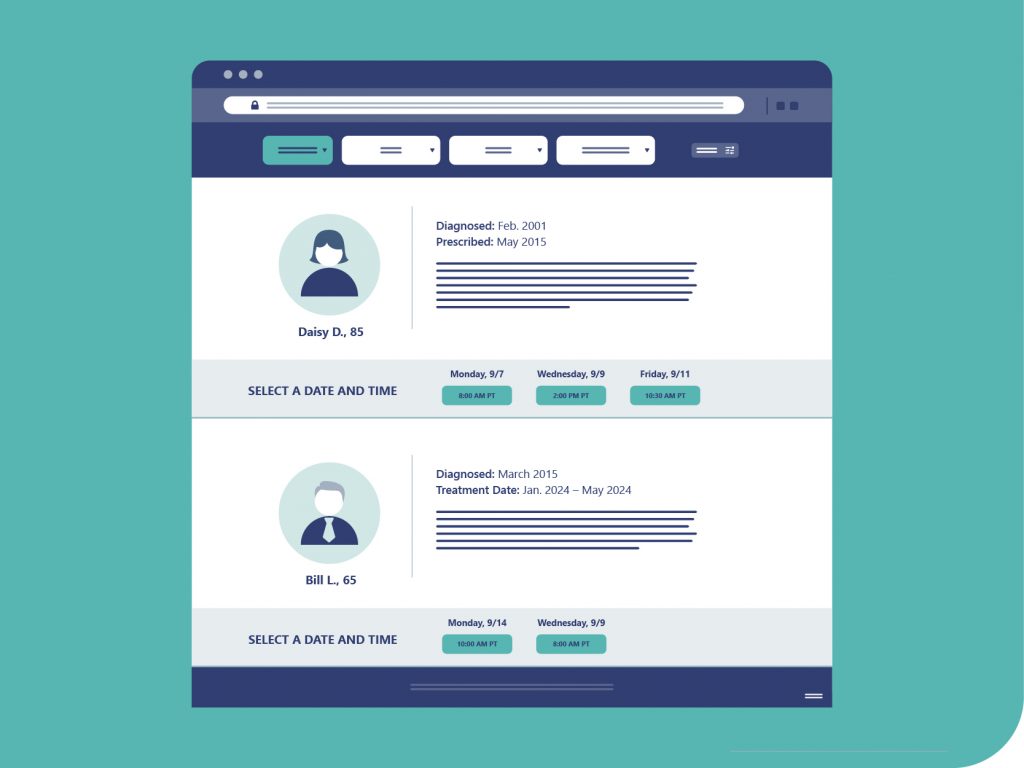
Mentor programs connect individuals seeking guidance with trained mentors who bring relevant lived or professional experience. Across patients, providers, and sites, mentors share practical insight, encouragement, and real-world perspectives, helping others see what’s possible.
Why It Matters:
Only mentorship grounded in real experience can combine credibility with empathy. Peer-based guidance builds trust, accelerates readiness, and sustains engagement in ways traditional education alone cannot.
How It Works:
We thoughtfully identify, train, and support mentors—matching them to the right audiences and moments of need. Every program is designed to be purposeful, well-supported, and aligned to clear outcomes.
Powered by reverbaBRIDGE, mentor interactions are structured, measurable, and compliant. Clients consistently see impact across domains, with renewal rates exceeding 90%.
Learn how a custom peer Mentor Program can drive measurable results for your organization.
Committed to Compliance